Quick answer
Find one finding in your own data that runs against what people assume. Write it up with a chart and a one-line method. Pitch it to ten writers who cover that beat. Send the coverage to a page that asks for an email address.
Every store sits on data that would make a decent story. What people buy before a holiday, which sizes run out first, what customers search for and never find. Most of it never leaves the spreadsheet.
Content-led digital PR means turning that data into something a writer can use, then making sure the attention lands somewhere useful.
Why it works for small brands
Big brands get coverage because they are big. Small brands get coverage because they have something new to say. A clear finding, backed by real orders, is new.
What you get from one good story
- Links from sites you could not buy a link from.
- Visitors who arrive curious, not already sold.
- A reason for those visitors to join your list.
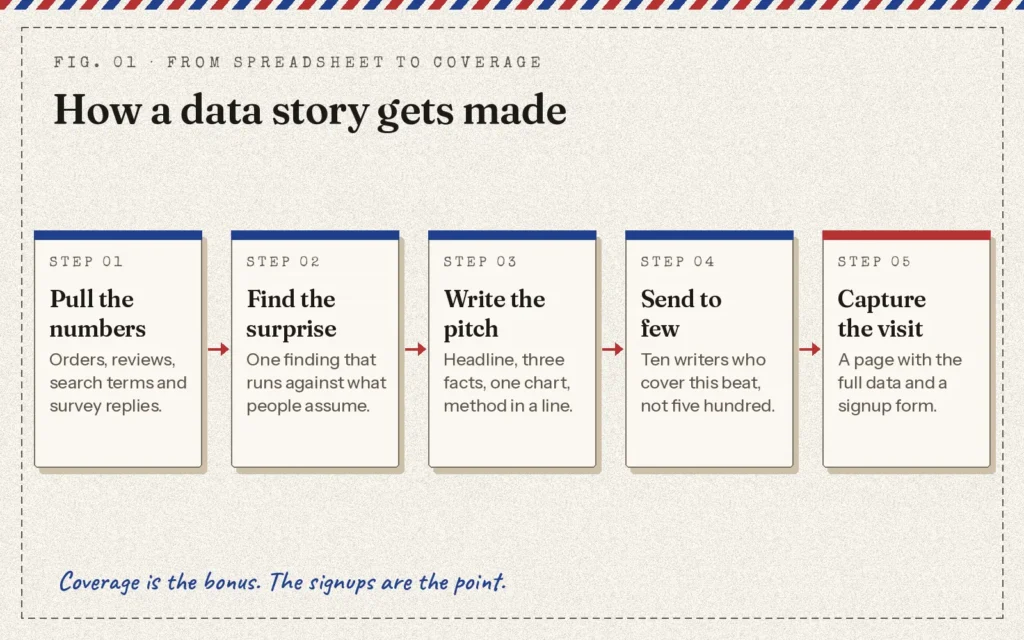
How a data story gets made
Step 1: Pull the numbers
Start with what you have: order history, product reviews, on-site search terms and post-purchase survey replies.
Where to look first
- Searches on your site that return no results.
- Products bought together that nobody planned to bundle.
- The day and hour orders peak, by region.
Step 2: Find the surprise
A story needs tension. “People buy more swimwear in summer” is not a story. “More swimwear is bought in January than in May” might be.
Step 3: Write the pitch
A headline, three facts, one chart and a line on how you got the data. If it takes more than a minute to read, it is too long.
A pitch we would send
Subject: Parents buy swim goggles six weeks before school lessons start, not the week before. Our order data from 40,000 families, with a chart and the method in one line.
Example subject line
Step 4: Send to few
Ten writers who cover your area will beat five hundred who do not. Read what they wrote last month before you write to them.
Step 5: Capture the visit
Send links to a page with the full findings, the chart and a signup form that offers the next report first. That is where the story turns into customers.
What to measure
| Measure | Why it matters |
|---|---|
| Pieces of coverage | Proof the story worked |
| Linking sites | Long-term search value |
| Visits to the findings page | Real interest, not just mentions |
| New subscribers from that page | The number that pays for it |

Sample letter, written to preview the blog layout. Brand details are withheld and the figures in the charts are illustrative.
Ahad Khaled
retaindtc.com